
Governance Structure
The governance structure of City of London College establishes the framework through which strategic leadership, academic governance and executive management operate together to support effective institutional oversight. It defines clear reporting relationships, delegated authority and decision-making responsibilities, ensuring that governance is transparent, accountable and focused on the interests of students.
The Board of Governors exercises overall responsibility for the governance of the College. It is supported by the Academic Board, which provides independent oversight of academic standards, academic quality, student outcomes and the academic student experience, together with specialist committees that undertake detailed scrutiny within their delegated areas of responsibility. These governance bodies provide assurance and recommendations that enable the Board to make informed strategic decisions.
The Executive and Operational Leadership Team is responsible for implementing the strategic direction established by the Board and for managing the day-to-day operation of the College. Working within the Scheme of Delegation and established reporting arrangements, the Executive provides regular assurance on institutional performance, financial sustainability, regulatory compliance, organisational risk and the delivery of strategic priorities.
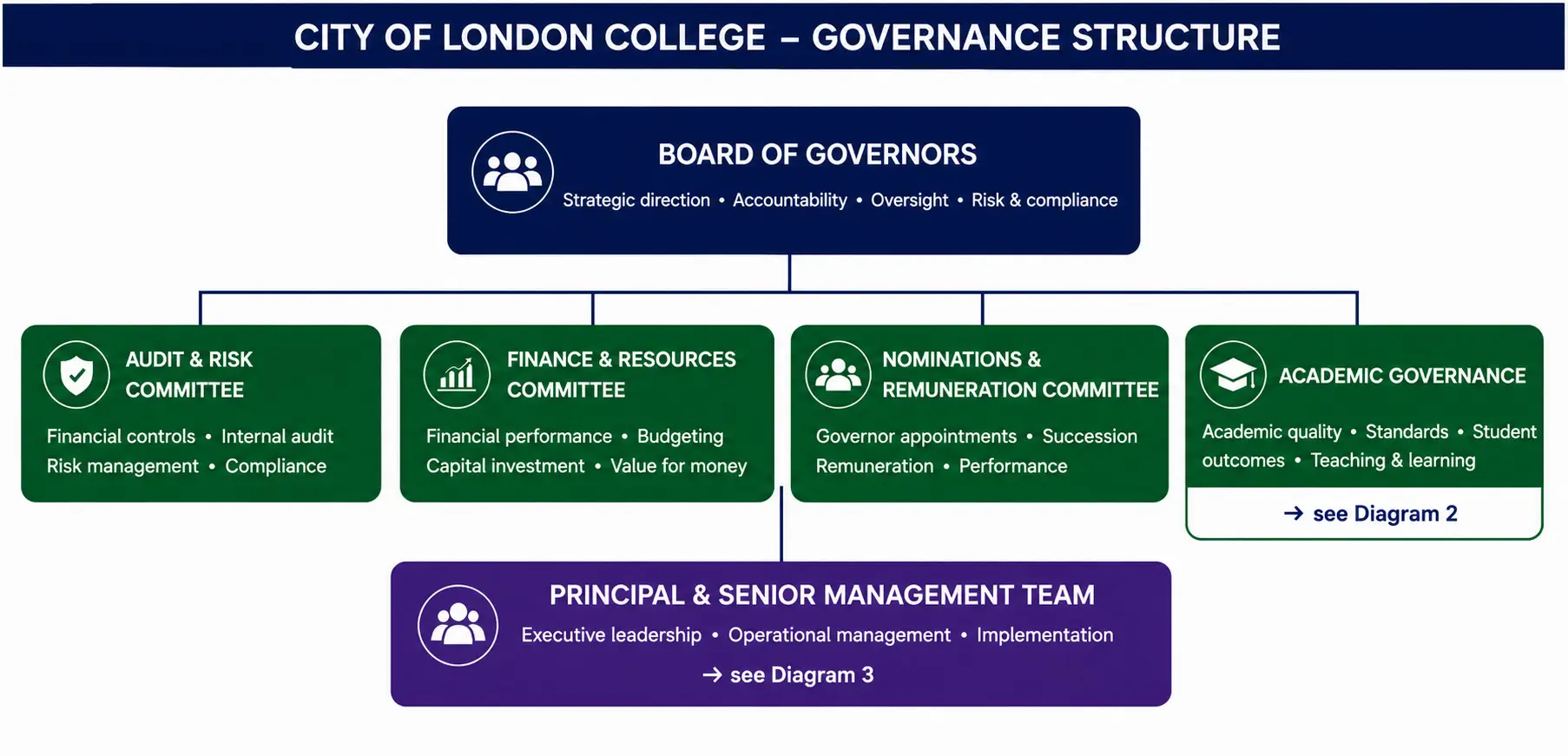
How the Governance Structure Operates
The governance structure is designed to ensure that responsibilities are clearly allocated and that decisions are taken at the appropriate level.
- The Board of Governors provides strategic leadership, approves institutional strategy and receives assurance regarding governance, academic quality, student outcomes, financial sustainability and regulatory compliance.
- The Academic Board provides academic leadership and assurance, overseeing academic standards, quality assurance, learning and teaching, assessment, curriculum development and student outcomes.
- Board Committees undertake detailed scrutiny, monitor institutional performance within their respective remits and make recommendations to the Board.
- The Executive and Operational Leadership Team manages the College’s operational activities, implements Board decisions and provides regular performance, compliance and risk reports to governance bodies.
This integrated structure ensures that governance, academic governance and operational management remain distinct while working collaboratively to support institutional effectiveness and continuous improvement.
Board of Governors
Provides strategic leadership, independent oversight and corporate accountability, ensuring that the College fulfils its mission, remains financially sustainable and operates in the interests of students and the public.

Reporting and Accountability
he governance structure operates through established reporting and assurance arrangements that enable information to flow effectively throughout the institution.
Academic matters are considered through the Academic Governance Framework before assurance is provided to the Board of Governors. Operational performance, financial management, organisational risk and regulatory compliance are monitored through executive reporting and committee oversight before matters requiring strategic approval are presented to the Board.
These reporting arrangements ensure that decisions are supported by appropriate scrutiny, reliable management information and evidence-based assurance, while maintaining clear accountability across all areas of college activity.
Periodic Review
The governance structure is reviewed periodically to ensure that it continues to support the College’s strategic objectives, academic provision and regulatory responsibilities. Reviews consider the effectiveness of reporting arrangements, committee structures, delegated authority and governance processes, ensuring that the framework remains proportionate, responsive and aligned with recognised higher education governance practice.
Through this structured approach, the College promotes effective decision-making, robust institutional oversight and continuous enhancement, ensuring that governance remains focused on academic excellence, positive student outcomes and the long-term sustainability of the institution.